Why Hands-On Care Is What Separates Good PT From Great PT
Walk into most physical therapy clinics today and you will see a gym — patients on cables, stability balls, and theraband, with therapists or aides cueing exercises from a few feet away. Exercise progression is part of every quality PT program. But it is not the only part, and at Improved Motions Physical Therapy in Stuart, FL, it is not even the most important part for most patients.
Hands-on manual therapy is the foundation of how we treat. It is the difference between teaching your body new movement patterns and waiting for it to figure them out on its own. It is what unlocks tissue, restores joint mechanics, breaks the pain-spasm cycle, and clears the way for exercise to actually produce adaptation. This guide explains every manual and movement-based technique we use, what each one treats, and how we combine them.
What Is Manual Therapy?
Manual therapy is the application of skilled hands-on techniques by a Doctor of Physical Therapy to mobilize joints, manipulate soft tissue, restore movement, and modulate the nervous system. The techniques themselves range from very gentle (low-grade joint mobilization) to firm (deep soft tissue work, dry needling, instrument-assisted techniques like Graston). What unites them is that they are performed by a credentialed expert with their hands directly on you — not by a machine, not by an aide, not by you alone with a foam roller.
Manual therapy is supported by a deep body of research showing that it accelerates recovery, reduces pain, and improves outcomes when combined with appropriate exercise. The latest clinical practice guidelines for low back pain, neck pain, shoulder impingement, and most other common orthopedic conditions explicitly recommend manual therapy as a first-line intervention.
Why Manual Therapy Outperforms Exercise-Only PT
There are situations where exercise alone is the right approach — simple deconditioning, very early-stage recovery, certain chronic pain presentations. But for most musculoskeletal injuries, exercise alone leaves outcomes on the table for three reasons:
- Tissue restriction — If a joint capsule is tight or fascia is adhered, no amount of exercise will restore full range of motion. Manual therapy releases the restriction so exercise can rebuild strength through the full range.
- Pain inhibition — Pain creates protective muscle guarding that inhibits proper movement. Manual therapy can interrupt the pain-spasm cycle, allowing exercise to be performed correctly.
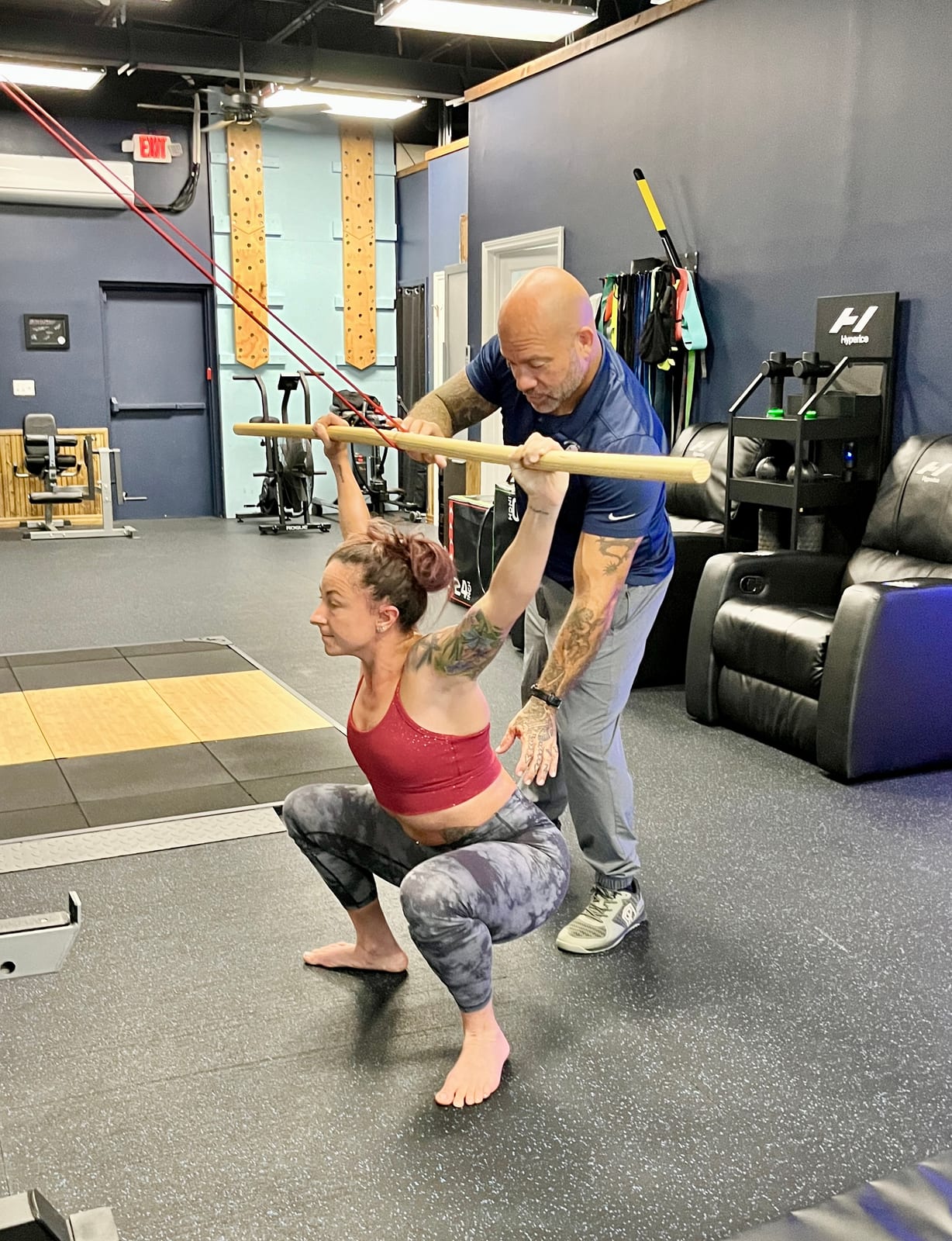
- Movement faults — Compensation patterns become deeply ingrained over months or years. Hands-on cueing and manual repositioning during movement teaches the nervous system new patterns far faster than verbal cueing alone.
At Improved Motions, every treatment session integrates manual therapy with progressive exercise. The combination is what produces the outcomes — not either one in isolation.
The Manual & Movement Toolkit at Improved Motions
Below is every hands-on technique we use, what it treats, and how it fits into a complete treatment plan.
Joint Mobilization and Manipulation
Skilled, graded movement of a joint by the Doctor of Physical Therapy to restore range of motion, reduce pain, and improve joint mechanics. Mobilizations are performed at varying grades — from gentle oscillations within the joint’s range (Grades I-II) to higher-amplitude movements at end range (Grades III-IV) to high-velocity manipulations (Grade V). Used for stiff joints, frozen shoulder, post-surgical contractures, neck and back stiffness, and any condition where joint motion is limited.
Soft Tissue Mobilization
Direct hands-on work on muscle, tendon, ligament, and fascia to release restriction, reduce pain, and improve tissue quality. This includes deep tissue work, myofascial release, trigger point release, and active release techniques. Used for chronic muscle tightness, trigger points, fascial adhesions from previous injuries, and post-surgical scar tissue.
Dry Needling
Insertion of a thin filament needle into trigger points or dysfunctional muscle tissue to elicit a twitch response, release tension, and reset the local nervous system. Dry needling is performed by Doctors of Physical Therapy who hold the Certified Myofascial Trigger Point Therapist (CMTPT) credential. It is fundamentally different from acupuncture (which is based on Traditional Chinese Medicine meridians) — dry needling targets specific musculoskeletal pathology based on Western anatomy and clinical reasoning. Used for chronic muscle pain, headaches, low back pain, neck pain, sports injuries, and any condition driven by trigger points or tight muscle tissue. The full breakdown is in our Dry Needling Explained post.
Graston Technique
Instrument-assisted soft tissue mobilization using stainless steel tools designed to detect and treat fascial restriction, scar tissue, and chronic soft tissue dysfunction. Graston is performed by Doctors of Physical Therapy who hold the Graston Technique Specialist (GTS) credential. The instruments allow the clinician to feel and treat tissue dysfunction at a depth and precision that is difficult to achieve with hands alone. Used for tendinopathies, plantar fasciitis, IT band syndrome, scar tissue, post-surgical adhesions, and chronic muscle and fascial restriction. Detail in Graston Technique & Cupping.
Cupping Therapy
Application of suction cups to the skin to lift fascia, increase local blood flow, and decompress soft tissue restriction. Used in static (stationary cup) and dynamic (cup glided across tissue) applications. Cupping is most effective for chronic muscle tightness, fascial restriction, post-workout soreness, and as part of recovery for athletes. The temporary marks are normal and clear within several days.
Blood Flow Restriction (BFR) Training
Use of a calibrated cuff to partially restrict venous blood flow during low-load exercise, producing strength and hypertrophy gains comparable to heavy resistance training without heavy loads. BFR is performed by Doctors of Physical Therapy with Personalized Blood Flow Restriction (PBFR) certification. It is the single most important advancement in post-surgical and post-injury rehab in the last decade. Used for post-surgical rehab (especially ACL, rotator cuff, hip and knee replacement), tendinopathies, fragile athletes, and aging patients who cannot tolerate heavy loading. Full breakdown in our BFR Training post.
Functional Movement Analysis (FAFS / 3D MAPS)
A systematic assessment of three-dimensional movement across the entire kinetic chain to identify the true source of pain or dysfunction — which is often distant from the site of pain. Performed by Doctors of Physical Therapy with Fellowship of Applied Functional Science (FAFS) or 3D Movement Analysis & Performance System (3D MAPS) credentials. This is what lets us recognize that your low back pain is actually driven by a hip mobility deficit, your shoulder impingement is rooted in a thoracic rotation limit, or your knee pain is coming from foot mechanics. The full application of this approach for golfers is in Golf Injury Recovery: How Functional Movement Analysis Fixes What Stretching Cannot.
Therapeutic Exercise and Movement Prescription
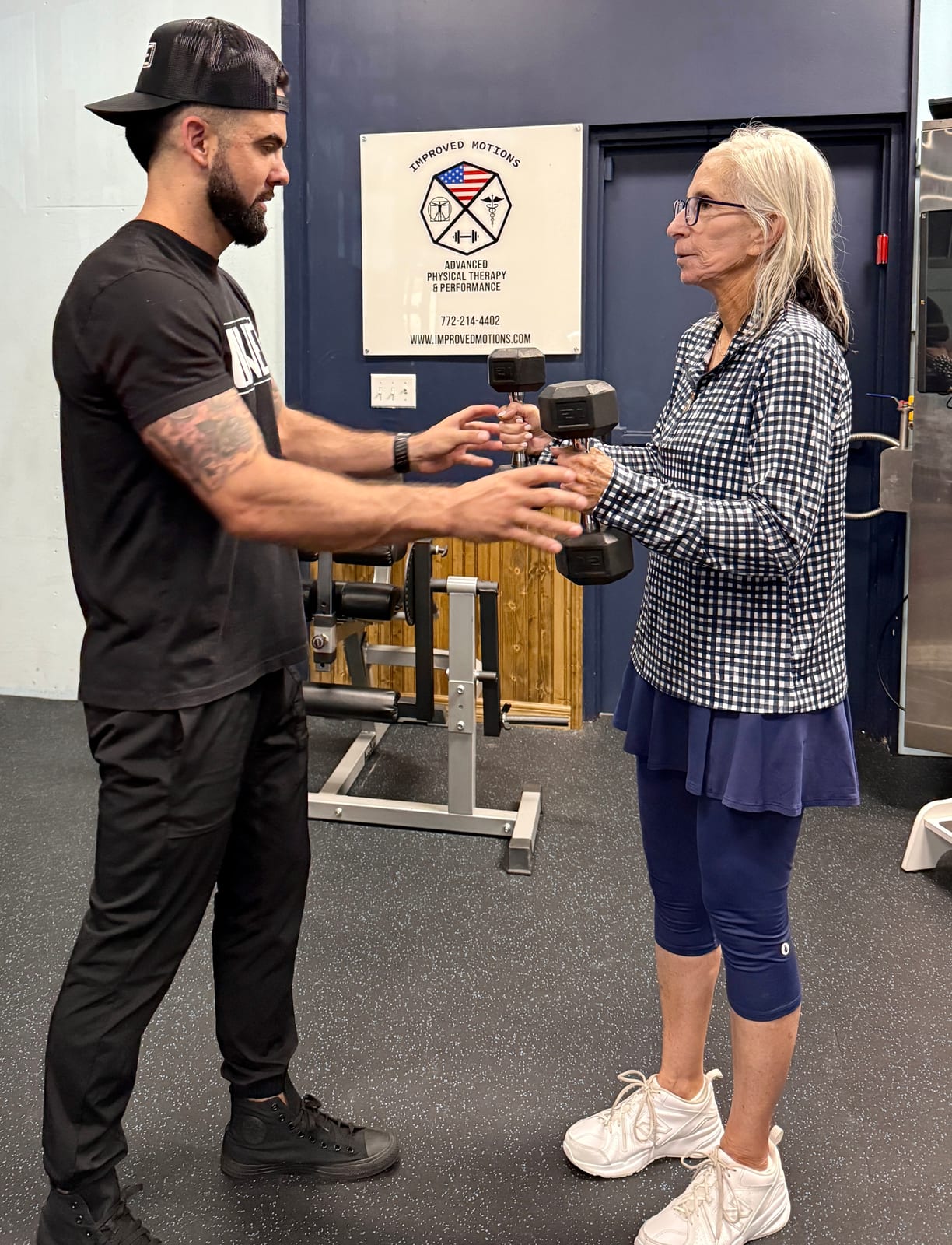
Progressive, individualized exercise programming designed to rebuild strength, mobility, motor control, and movement patterns specific to your goals — not a generic protocol. Every exercise is selected based on the manual therapy work we just performed, the dysfunction we identified in your movement analysis, and the demands of your daily life or sport. This is where the gains made on the table get translated into how you actually move.
How These Techniques Are Combined
The art of physical therapy is not in any single technique — it is in how techniques are sequenced and combined. A typical treatment session might integrate three or four of the techniques above. For example, a patient with chronic neck pain and headaches might receive:
- 5 minutes of soft tissue work to the upper trap and suboccipital muscles
- 10 minutes of joint mobilization to the cervical and thoracic spine
- 5 minutes of dry needling to specific trigger points in the levator scapulae
- 15-20 minutes of progressive postural and motor control exercises
- 5-10 minutes of red light therapy or PEMF to reduce post-treatment soreness
Each component does something the others cannot do alone. Combined, they produce outcomes that exercise-only PT cannot match. This integration is what we call Recovery Stacking, and it is the foundation of how we treat every patient.
Who Provides These Techniques at Improved Motions
Every technique above is performed exclusively by a Doctor of Physical Therapy — never by an aide or technician. Our clinical team holds advanced credentials across the full spectrum of techniques described:
- Dr. Michael Mann, PT, FAFS, MTC, CMTPT, CSCS, GTS, PBFR, ADN — Founder. Fellowship of Applied Functional Science, Manual Therapy Certified, dry needling certified, Graston Technique Specialist, BFR-certified.
- Dr. Taylor Sloan, PT, DPT, ADN, PBFR, GTS, 3D MAPS — Doctor of Physical Therapy with advanced credentials in 3D movement analysis, BFR, and Graston. Former NCAA D2 athlete.
- Dr. Lauren Paulin, MS, PT, DPT, ADN, PBFR, GTS, 3D MAPS — 12+ years of clinical experience. Doctor of Physical Therapy with advanced credentials in 3D movement analysis, BFR, and Graston.
When you book at Improved Motions, you are matched with the Doctor of PT whose specialty most closely fits your case. Every Doctor on our team is qualified to perform the full toolkit above.
Conditions These Techniques Treat
The techniques in this guide are used to treat the full range of orthopedic, sports, and post-surgical conditions, including but not limited to:
- Low back pain, sciatica, and disc-related symptoms
- Neck pain, headaches, and whiplash
- Shoulder impingement, rotator cuff injuries, and frozen shoulder
- Tennis elbow, golfer’s elbow, and forearm tendinopathy
- Hip impingement, glute weakness, and hip arthritis
- Knee pain, meniscus injuries, ACL post-surgical rehab, patellofemoral pain
- Plantar fasciitis, Achilles tendinopathy, ankle sprains
- Pickleball injuries, golf injuries, running injuries, baseball injuries
- Post-surgical rehabilitation across all major joints
How to Get Started
If you are dealing with an orthopedic injury, post-surgical rehab, or a chronic issue that has plateaued in another setting, the first step is an evaluation. A Doctor of Physical Therapy will assess your case, identify which combination of the techniques above will produce the best outcome, and design your treatment plan.
No referral required — see our Florida Direct Access guide for the legal background. For the financial mechanics, see The Complete Guide to Self-Pay Physical Therapy.
What Makes Improved Motions Different
- A full hour, one-on-one, every visit. You work with a Doctor of Physical Therapy the whole time. No aides running your session and no other patients sharing your hour.
- Self-pay, so your recovery sets the plan. No insurance visit caps or authorizations. HSA and FSA cards are accepted, and you get a superbill for out-of-network reimbursement. See payment options.
- No referral needed. Florida is a direct access state, so you can book an evaluation directly.
- A Recovery Room under the same roof. Cryotherapy, hyperbaric oxygen, red light therapy, Normatec compression and PEMF, guided by the same team treating you. See the Recovery Room.
- Advanced, hands-on training. Dry needling, blood flow restriction training, manual therapy and functional movement analysis, led by founder Dr. Michael Mann, PT, DPT.
- 5-star rated by our patients on Google, right here in Stuart and serving the Treasure Coast.
Get Started at Improved Motions
Florida is a direct access state — no referral required to start physical therapy. Call (772) 214-4402 or book online to schedule your initial evaluation.
We serve patients in Stuart, Palm City, Jensen Beach, Port St. Lucie, Hobe Sound, Jupiter, Tequesta, Indiantown, and throughout the Treasure Coast.