The Short Answer: Most New Back Pain Does Not Need an MRI
For most new back pain without red-flag symptoms, clinical guidelines recommend against early imaging. The American College of Physicians guideline directs clinicians toward nonpharmacologic, movement-based care first, and an MRI in the first weeks rarely changes what that care looks like. Starting with a hands-on evaluation is also typically cheaper: in a study published in Physical Therapy Journal, patients with new low back pain who started with physical therapy spent 13% less over 30 days and 32% less over 90 days than comparable patients who did not.
At Improved Motions Physical Therapy in Stuart, FL, we hear the same question almost weekly: “Should I get an MRI first so we know what is wrong?” The instinct makes sense. For most people, though, it is the slower and more expensive road to the same destination.
Why Does an MRI Often Mislead for Back Pain?
An MRI shows structure, but back pain is usually a problem of function, and the two frequently do not match. Imaging studies regularly find disc bulges, disc degeneration, arthritic changes, and annular tears in adults who have no back pain at all. These findings become more common with every decade of life, the same way gray hair does. So when an MRI of a painful back shows a bulging disc, that finding may explain the pain. It may also be an incidental feature that was there for years before the pain started and will still be there long after it resolves.
This is the core problem with the imaging-first approach. The scan hands you a label, and labels are sticky. In our experience, patients who are told “you have degenerative disc disease” often guard more and move less, and they begin to fear the very activities that would help them recover. The picture did not change their spine. It changed their behavior.
What Actually Determines Your Treatment?
Treatment decisions for back pain come from a movement evaluation. What we need to know is which positions, movements, and loads provoke your symptoms and which ones relieve them. Does your pain centralize when you extend and worsen when you sit? Does it ease with walking? Does a single leg tolerate load poorly? Is your hip mobility forcing your lumbar spine to do work it should not be doing?
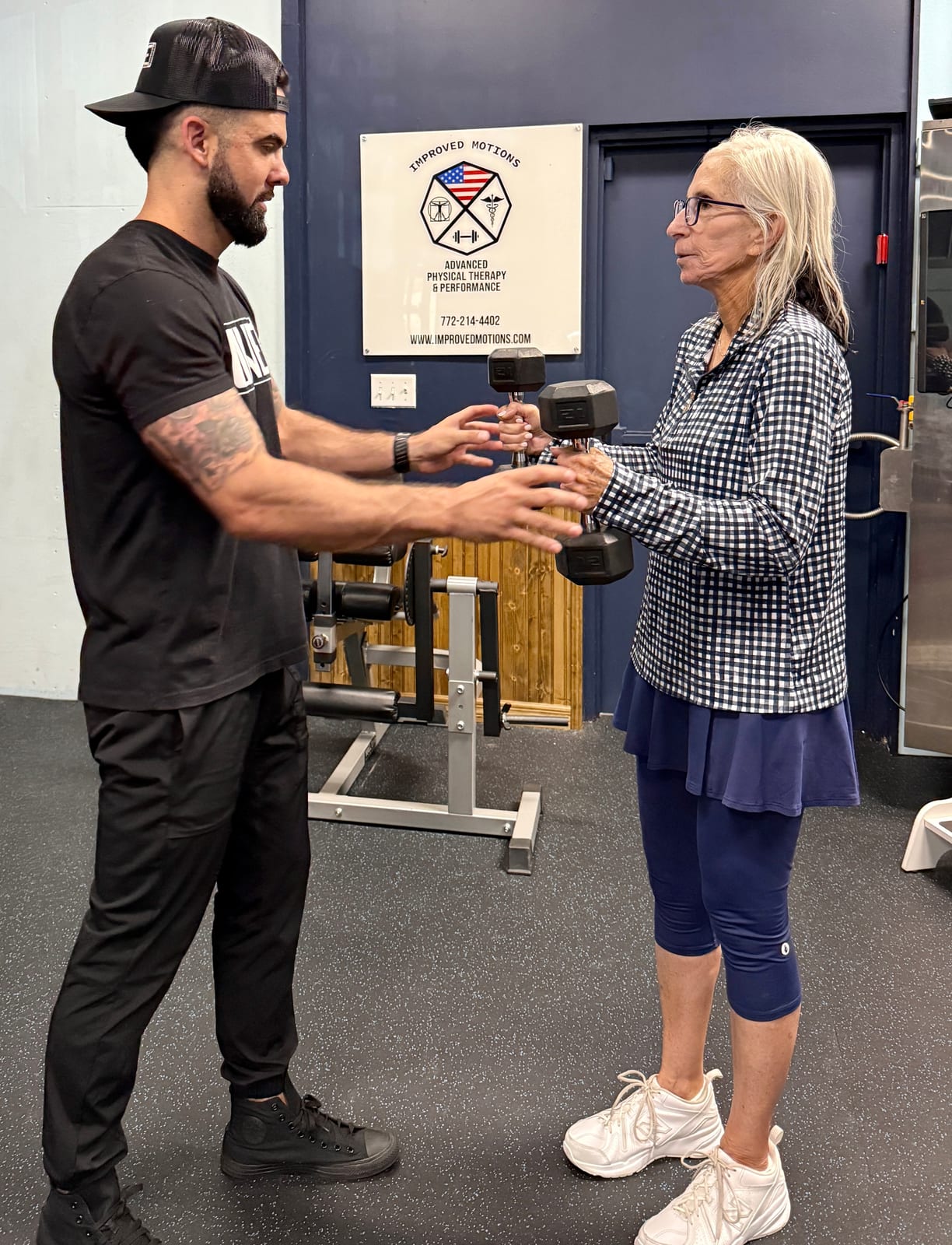
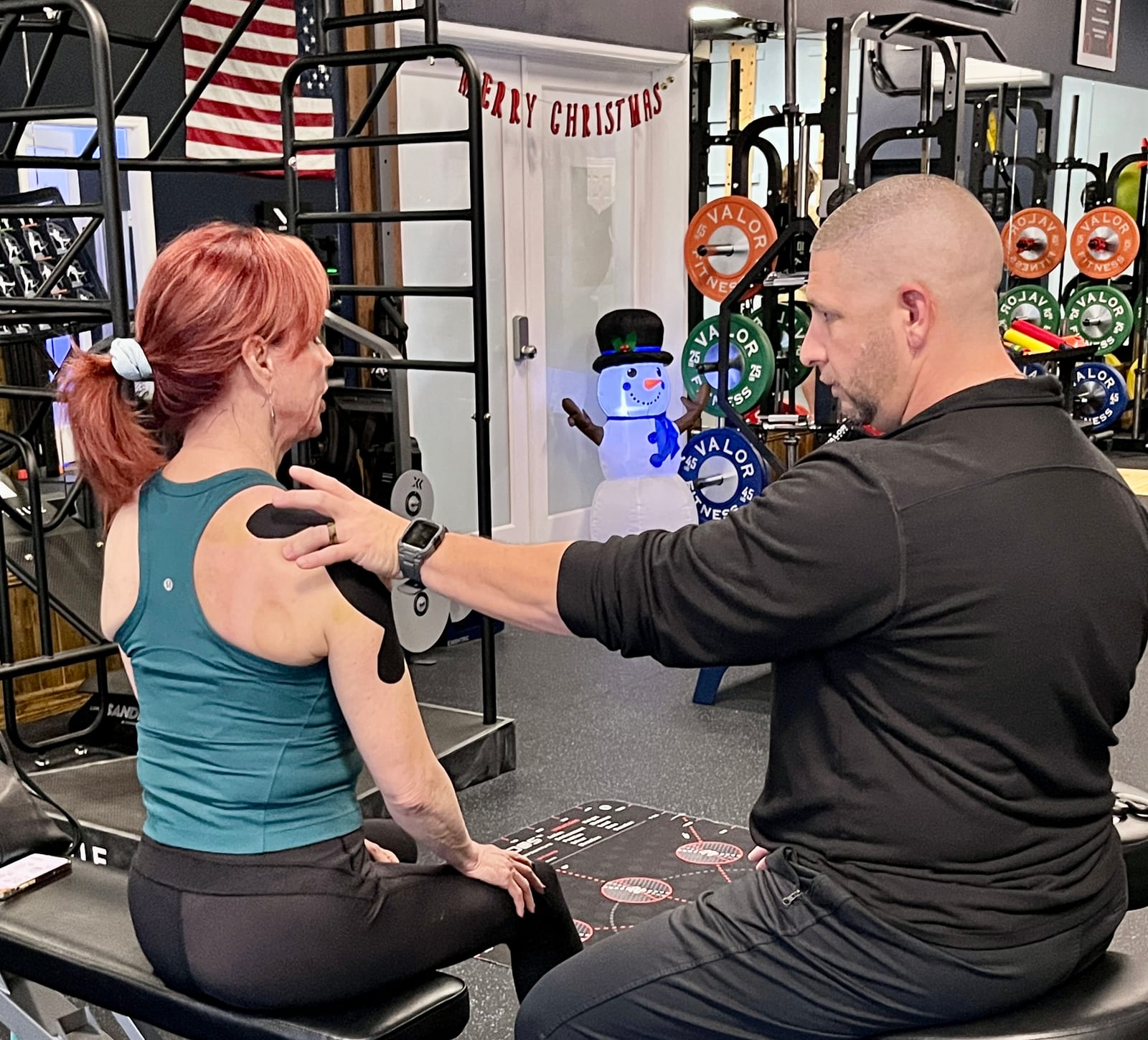
Those answers direct care in a way no scan can. During an initial evaluation, our Doctors of Physical Therapy spend a full one-on-one hour testing exactly these variables, then build a plan around them: graded movement, manual therapy, and progressive loading matched to what your evaluation showed. Two patients with identical MRI findings often need entirely different programs, because their movement examinations tell two different stories. That is why the evaluation, and the full low back pain plan it feeds, comes first.
Imaging or Not? A Quick Guide
The first step depends on your situation, and for most people it is an evaluation rather than a scan.
| Situation | Imaging usually needed? | The right first step |
|---|---|---|
| Typical new back pain, no red flags | No | Movement evaluation and guideline-based care, usually within days |
| Back pain \> 6 weeks, not improving with care | Sometimes | Re-evaluation; we coordinate a physician referral for imaging if progress has stalled |
| Red-flag symptoms present | Yes, likely | Physician or emergency evaluation first; imaging is often part of that workup |
| Planned injection or surgery consult | Yes | MRI ordered by the physician performing or planning the procedure |
When Is an MRI the Right Call?
Imaging moves to the front of the line when red-flag symptoms are present. See a physician promptly, before starting physical therapy, if your back pain comes with any of the following:
- Loss of bowel or bladder control
- Numbness in the saddle region (inner thighs, groin, area you would contact a bicycle seat)
- Fever alongside back pain
- Significant trauma, such as a fall from height or a vehicle collision
- Progressive weakness in a leg or foot
- Unexplained weight loss
- A personal history of cancer
These signs can point to conditions that need medical imaging and physician management first, and an MRI is often exactly the right tool in that workup. Imaging is also appropriate when a physician is planning an injection or a surgical consult, because the procedure itself depends on the anatomy. Our guide on signs you need more than physical therapy covers this screening in more detail. We build that screening into every evaluation we perform.
What Does the Imaging-First Path Actually Cost?
The imaging-first path usually costs more time and more money without changing early treatment. A typical sequence looks like this: wait one to two weeks for a physician visit, get an imaging order, wait again for the MRI and the radiology read, then return to discuss the findings. Those findings frequently trigger a specialist referral and another wait. A month or more can pass before anyone has asked you to move, and the bills have already started arriving. The PTJ cost data reflects exactly this pattern: the PT-first group spent meaningfully less over both 30 and 90 days.
Florida is a direct access state, so you can start physical therapy this week, often within a day or two, with no referral and no imaging requirement. One note on how that works: if care for a new condition runs past 30 days, Florida law requires a physician or other practitioner of record to review and sign the plan. That is routine coordination we handle for our patients. For the dollars-and-cents comparison of starting with evaluation versus starting with imaging and referrals, see our insurance versus self-pay cost breakdown.
How Do Physical Therapy and Imaging Work Together?
We still use imaging. The question is when. If your evaluation raises concerns, if symptoms progress in a pattern suggesting significant nerve involvement, as in some sciatica presentations, or if six weeks of well-executed care has not produced improvement, we refer you to a physician and imaging becomes a sensible next step. At that point the MRI answers a specific question instead of generating a pile of incidental findings, and your physician gets a detailed record of what has already been tried. The guidelines describe exactly this sequence: movement-based care first, then imaging when the case warrants it, with clear communication between providers at every step. It is how we approach everything we treat.
Frequently Asked Questions
What does an MRI miss? Function. An MRI cannot show which movements provoke your pain, how your muscles behave under load, whether your symptoms centralize or peripheralize, or how your hips and thoracic spine contribute to the problem. Those are the factors that direct treatment, and they only show up in a physical examination.
My MRI shows a disc bulge. Is that why I hurt? Maybe. Disc bulges are common in adults with no pain at all, so the finding by itself does not confirm the cause. A movement evaluation tells us whether that disc is actually generating your symptoms, and treatment targets what the examination finds.
Can a physical therapist order an MRI in Florida? We refer to a physician when imaging is warranted rather than ordering it directly. Because we coordinate that referral and send along our examination findings, the process is typically fast and the imaging question is well defined before the scan happens.
Should I get an X-ray first instead? Usually not. The same logic applies: without red flags or significant trauma, an X-ray rarely changes early treatment for back pain, and degenerative changes on X-ray are as common in pain-free adults as they are on MRI.
How fast can I be seen without a referral? Most patients get an evaluation within a few days, sometimes the same week they call. Under Florida direct access, no physician referral is required to begin, so there is no built-in waiting period between “my back hurts” and “I have a plan.”
This article is general information from the team at Improved Motions Physical Therapy, not medical advice for any specific condition. For evaluation of your situation, see a licensed provider.
What Makes Improved Motions Different
- A full hour, one-on-one, every visit. You work with a Doctor of Physical Therapy the whole time. No aides running your session and no other patients sharing your hour.
- Self-pay, so your recovery sets the plan. No insurance visit caps or authorizations. HSA and FSA cards are accepted, and you get a superbill for out-of-network reimbursement. See payment options.
- No referral needed. Florida is a direct access state, so you can book an evaluation directly.
- A Recovery Room under the same roof. Cryotherapy, hyperbaric oxygen, red light therapy, Normatec compression and PEMF, guided by the same team treating you. See the Recovery Room.
- Advanced, hands-on training. Dry needling, blood flow restriction training, manual therapy and functional movement analysis, led by founder Dr. Michael Mann, PT, DPT.
- 5-star rated by our patients on Google, right here in Stuart and serving the Treasure Coast.
Get Started at Improved Motions
Florida is a direct access state, so you can start physical therapy without a physician referral. Call (772) 214-4402 or book online to schedule your initial evaluation.
We serve patients in Stuart, Palm City, Jensen Beach, Port St. Lucie, Hobe Sound, Jupiter, Tequesta, Indiantown, and throughout the Treasure Coast.