Summer Training on the Treasure Coast Is a Different Sport
From May through September, the Treasure Coast becomes a different training environment. Air temperatures push into the mid-90s. Humidity stays above 70%. Pavement and beach sand surface temperatures climb past 130°F. The same workout that felt routine in March becomes a physiological stress test in June.
At Improved Motions Physical Therapy in Stuart, FL, we see a predictable shift in injury patterns every summer. Plantar fasciitis spikes from beach training and barefoot walking. Shoulders break down from paddleboard, kayak, and boat work. Achilles tendons get hammered by hot pavement runs. Lower backs strain under boat hauling, dock work, and yard projects. The injuries are different, the recovery demands are different, and the training adjustments matter.
This guide walks through the specific summer injuries we see most often on the Treasure Coast, how to prevent them, and how recovery modalities like cryotherapy become even more valuable in the heat.
Why Heat Changes the Injury Picture
When you train in 90°F+ heat with high humidity, three things happen that increase injury risk:
- Cardiovascular load increases significantly — your heart has to pump more blood to the skin for cooling, leaving less for muscles, which fatigue earlier
- Muscles dehydrate faster — reducing tissue elasticity and making strains more likely
- Decision-making and reaction time degrade — increasing the risk of falls, missed steps, and movement errors
- Surfaces get punishingly hot — pavement, sand, and pickleball courts hold heat that translates directly into the soft tissues of your feet
All of this means you are training a less resilient body on harsher surfaces. The injuries that follow are predictable.
The Most Common Summer Injuries on the Treasure Coast
Plantar Fasciitis from Beach Walking and Barefoot Training
Walking and running on soft sand demands enormous work from the foot intrinsics, calves, and plantar fascia. Combined with the high heat of summer sand and the typical Treasure Coast pattern of barefoot walking from beach to boardwalk to grass, plantar fasciitis becomes a near-epidemic in June and July. Prevention: limit barefoot walking on hot surfaces, use supportive sandals on the beach, and incorporate calf and intrinsic foot strengthening before peak season. Treatment: see our runner’s guide.
Achilles Tendinopathy from Hot Pavement
Asphalt and concrete temperatures on a 90°F day reach 140-150°F. The thermal load combined with the higher loading rates that come from running in fatigued tissue makes the Achilles tendon particularly vulnerable. Prevention: train at sunrise or after sunset, use the most cushioned surfaces available (Riverwalk, the Savannas Preserve trails, indoor tracks), and prioritize calf eccentrics in your training week. Treatment: same approach as our runner’s guide; manual therapy and BFR-based loading have transformed Achilles outcomes.
Shoulder Issues from Paddleboard, Kayak, and Boat Work
Summer brings water sports, and water sports bring shoulder problems. Paddleboarding loads the rotator cuff and serratus anterior in high-rep, low-load patterns that expose stability deficits. Kayaking adds rotational load to an already-fatigued upper body. Boat work — lifting coolers, hauling lines, working on docks — creates traumatic loading on top of the chronic loading. Prevention: train rotator cuff stability and scapular control year-round, not just before vacation. Treatment: manual therapy to the shoulder complex plus dry needling to the upper trap and infraspinatus is highly effective.
Pickleball Injuries (Year-Round, but Worse in Summer Heat)
Pickleball does not slow down in summer, but the body’s ability to handle it does. The lateral movements, hard court surfaces, and rotational forces that produce pickleball elbow, Achilles tendinopathy, and meniscus strain are all magnified by heat and dehydration. We covered the full injury picture in our pickleball injuries guide.
Low Back Strain from Yard Work, Boat Work, and Renovations
Summer is project season on the Treasure Coast — hurricane prep, dock repair, landscaping, pool work. The combination of heavy lifting, sustained bending, and heat-induced fatigue makes low back strain extremely common. Prevention: brace properly, use leverage and equipment rather than back strength, and respect heat fatigue. Treatment: manual therapy to restore segmental motion, dry needling to break the muscle-spasm cycle, and progressive loading to rebuild capacity.
Heat-Related Performance Decline
Even when you do not get injured, training in summer heat without proper recovery accumulates fatigue that compounds over weeks. Athletes who do not adjust their summer training and recovery often arrive at fall sports already partially broken down — with chronic minor strains, sleep disruption from elevated core temperature, and a nervous system that has been stuck in sympathetic overdrive for months.
Hydration Strategy That Actually Matters
Drinking water all day is necessary but not sufficient for serious summer training. The strategy that protects performance and tissue health:
- Pre-load fluids 12-24 hours before key training sessions, not just the morning of
- Add electrolytes — sodium, potassium, magnesium — to all fluids consumed during summer training
- Match fluid intake to sweat losses; weigh yourself before and after training as a baseline
- Watch urine color and frequency — dark or infrequent urination is a red flag
- Recognize warning signs early — nausea, dizziness, cramping, abnormal fatigue, headache during or after training
When to Train, When to Rest
The hardest part of summer training is recognizing when the heat has won. Some practical guidelines:
- If the heat index exceeds 105°F, scale intensity by 30-50%
- If you cannot recover your heart rate between intervals the way you usually do, the workout is over
- If you wake up with elevated resting heart rate, take a recovery day — your nervous system is telling you something
- If a small injury feels like it is not healing the way it normally would, get evaluated; tissue healing slows in chronic dehydration and heat stress
Why Recovery Modalities Matter More in Summer
The case for recovery tools — cryotherapy, hyperbaric oxygen, red light therapy, PEMF, Normatec — gets stronger in summer because the underlying physiological stress is higher. Cryotherapy after summer training does what an ice bath used to do, with better tolerance and a deeper systemic effect. Hyperbaric oxygen accelerates the tissue repair that is being slowed by chronic dehydration and heat stress. Normatec compression flushes the legs after long beach walks or runs. Red light therapy and PEMF accelerate cellular recovery between training sessions.
At Improved Motions, our patients who are training hard through summer rotate through these modalities 1-2 times per week as part of a sustainable program. The compounding effect is significant by August. Full breakdown in our Recovery Stacking guide.
Pre-Season Conditioning for Fall Sports
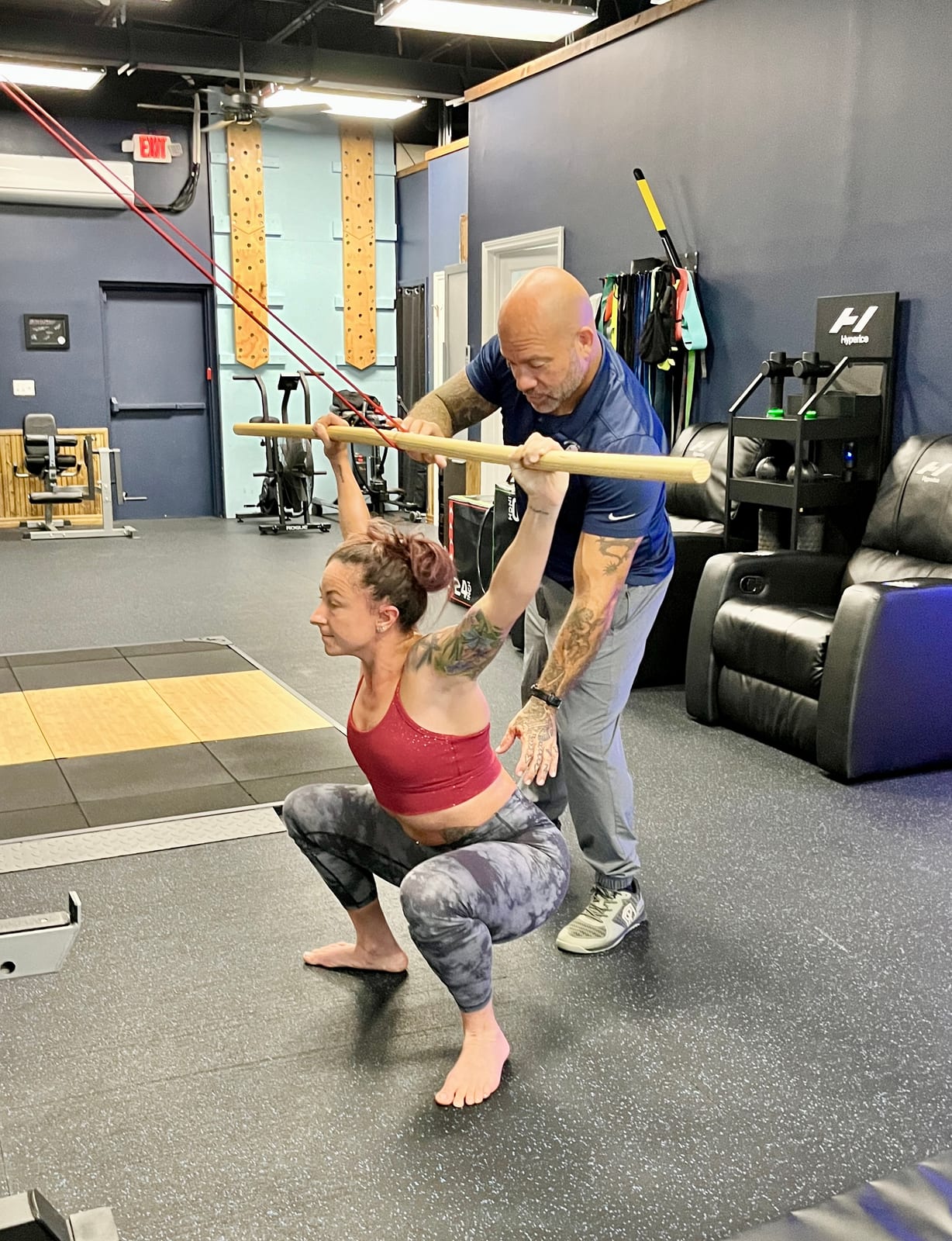
For high school and youth athletes, summer is the most important window for fall sports preparation — and the highest-injury-risk window of the year. We work with athletes throughout summer to build the strength, mobility, and movement quality that protects them once practices start in August. Programs typically include:
- Functional movement assessment to identify asymmetries and risk patterns
- Sport-specific strength and power development
- Blood flow restriction training for hypertrophy without heavy loading in the heat
- Movement preparation work specific to the demands of football, soccer, volleyball, baseball, and lacrosse
- Recovery programming to manage the cumulative load of summer training
If You Are Already Injured
Summer injuries that are caught early respond well. Summer injuries that are pushed through for weeks tend to drag into fall. If you are dealing with any of the issues described above, the best move is to evaluate now — not in October when the issue has compounded.
Direct access in Florida means no referral required. See our Florida Direct Access guide for the full breakdown.
What Makes Improved Motions Different
- A full hour, one-on-one, every visit. You work with a Doctor of Physical Therapy the whole time. No aides running your session and no other patients sharing your hour.
- Self-pay, so your recovery sets the plan. No insurance visit caps or authorizations. HSA and FSA cards are accepted, and you get a superbill for out-of-network reimbursement. See payment options.
- No referral needed. Florida is a direct access state, so you can book an evaluation directly.
- A Recovery Room under the same roof. Cryotherapy, hyperbaric oxygen, red light therapy, Normatec compression and PEMF, guided by the same team treating you. See the Recovery Room.
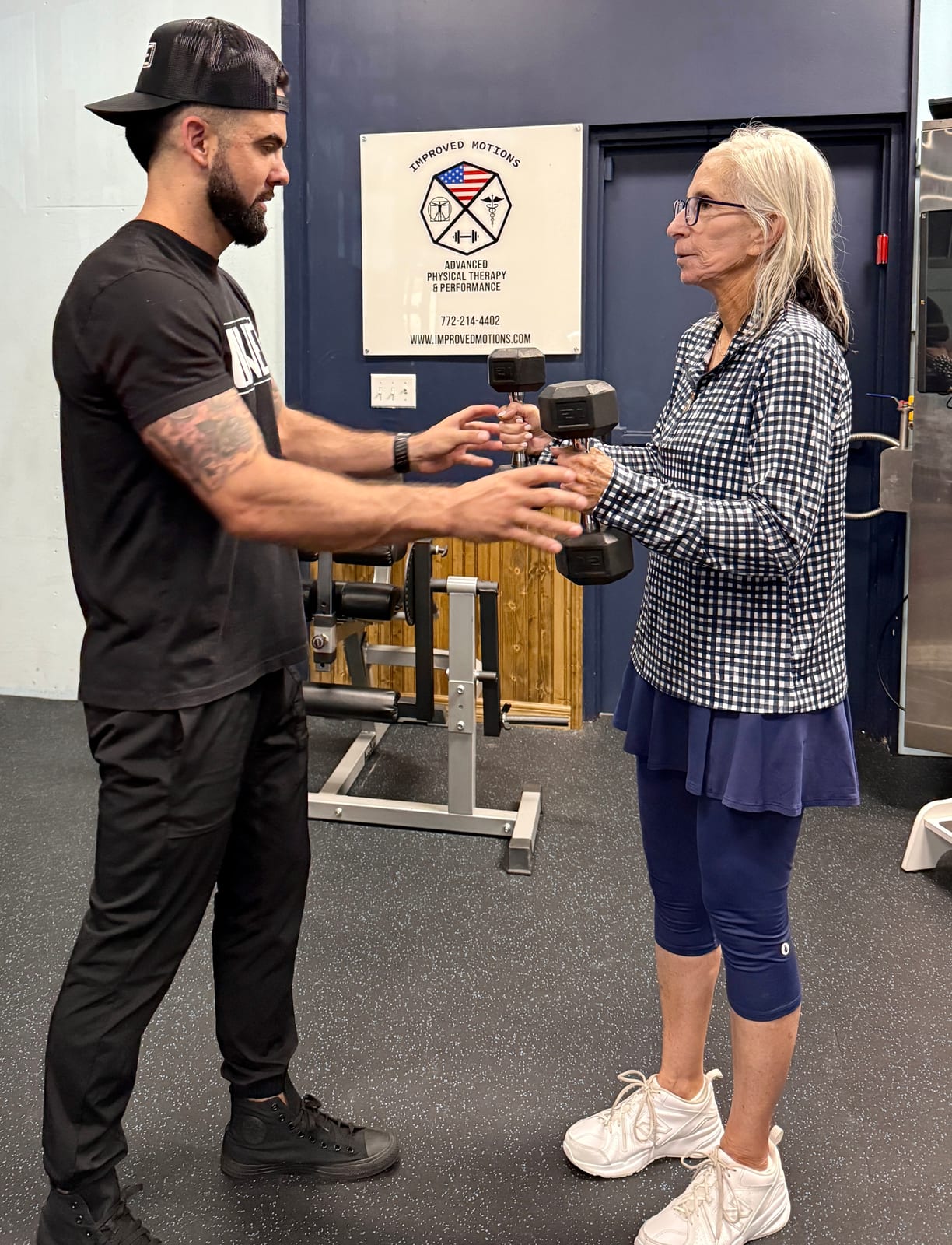
- Advanced, hands-on training. Dry needling, blood flow restriction training, manual therapy and functional movement analysis, led by founder Dr. Michael Mann, PT, DPT.
- 5-star rated by our patients on Google, right here in Stuart and serving the Treasure Coast.
Get Started at Improved Motions
Florida is a direct access state — no referral required to start physical therapy. Call (772) 214-4402 or book online to schedule your initial evaluation.
We serve patients in Stuart, Palm City, Jensen Beach, Port St. Lucie, Hobe Sound, Jupiter, Tequesta, Indiantown, and throughout the Treasure Coast.