Why Does Low Back Pain Keep Coming Back?
Low back pain recurs because most treatment targets the painful spot instead of the cause, which usually lives somewhere else. The lower back is where forces from the hips, pelvis, and trunk converge. Stiff hips force the back to bend more than it should. Weak deep core muscles leave the small muscles of the spine working overtime. And when daily habits load the spine the same way thousands of times, whether that is sitting slumped at a desk, lifting with a rounded back, or swinging a golf club through hips that do not rotate, the tissue absorbing all of it eventually complains.
Rest, heat, and medication can calm a flare. They do nothing about the stiff hips or the weak trunk. That is why so many patients tell us the same story: the pain faded, life went back to normal, and three months later it returned, often worse than before. Breaking that cycle means treating the pattern, and finding the pattern takes an evaluation longer than seven minutes.
What Do the Guidelines Actually Recommend First?
The American College of Physicians recommends nonpharmacologic care (exercise, manual therapy, and rehabilitation approaches) as first-line treatment for low back pain, before medication and well before injections or surgery. You can read a summary of the ACP guideline for yourself; the takeaway is straightforward. For acute low back pain, most people improve regardless of treatment, so the priority is staying active and avoiding unnecessary interventions. For chronic low back pain, exercise-based rehabilitation sits at the top of the list.
Imaging, opioids, injections, and surgical consults appear nowhere in those first-line recommendations. Those tools exist for specific situations (we discuss the red flags below), but for the everyday back pain that affects most adults, guideline-based care looks a great deal like what happens in a physical therapy clinic. There is a financial argument as well. In the PTJ study linked above, patients in direct-access states who started with physical therapy for new low back pain spent 13% less over the first 30 days and 32% less over 90 days compared with those who started elsewhere.
What Does a Doctor of PT Evaluation Find That a Quick Physician Visit Cannot?
A 60-minute movement evaluation finds the mechanical cause of your pain: the specific joint restriction, muscle imbalance, or movement habit driving it. A brief office visit is not designed to uncover that. A typical primary care appointment for back pain runs a few minutes, rules out serious pathology, and ends with general advice. That is a reasonable screening visit, but it never examines how you actually move.
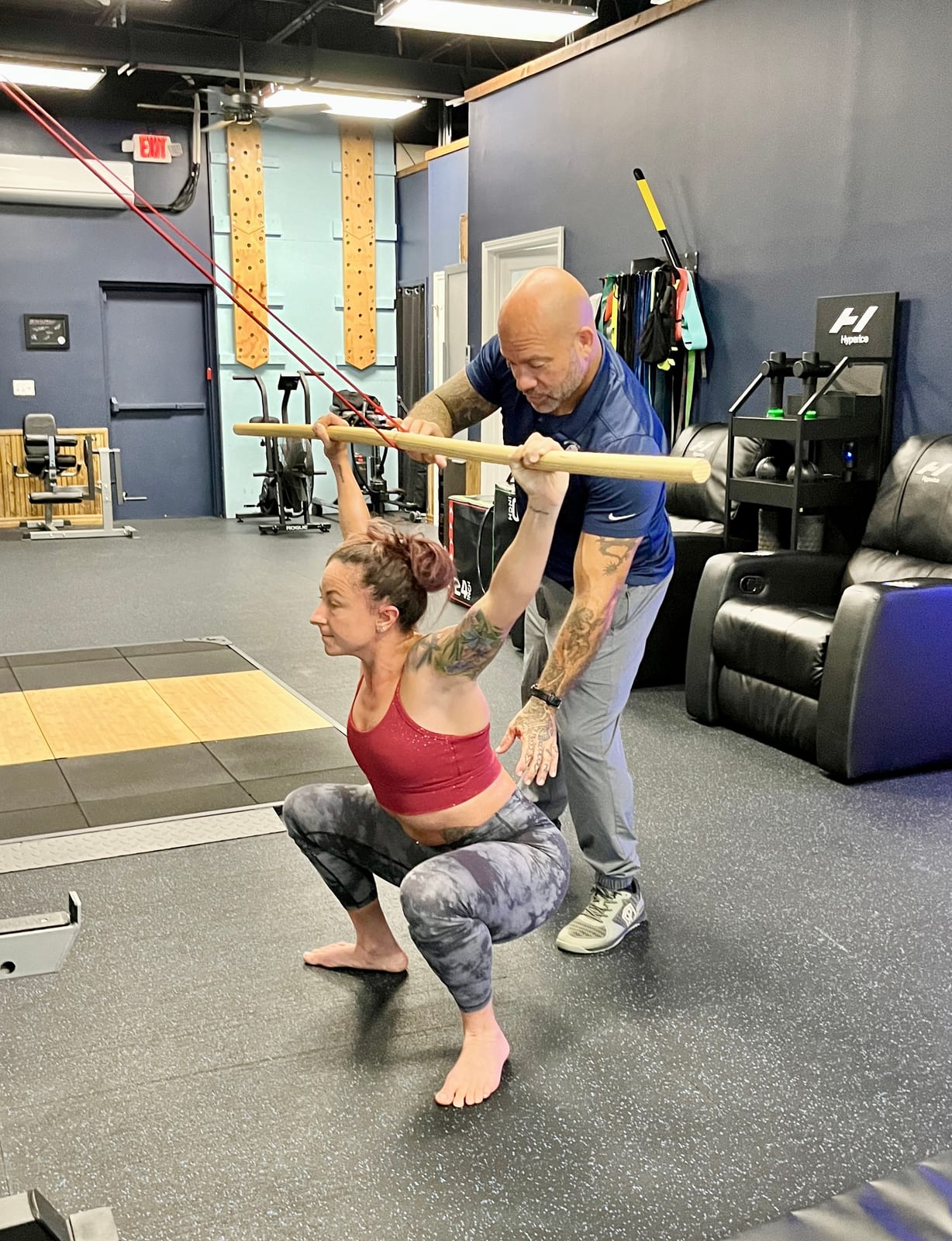
Our Doctors of Physical Therapy use FAFS (Functional and Applied Functional Science) and 3D MAPS movement analysis to watch your spine, hips, and trunk work together in all three planes of motion, the way real life loads them. We look at how you bend, rotate, squat, and shift weight, then test the specific joints and tissues that the movement screen implicates. The result is a working answer to the question that matters: why does this back hurt? From there, treatment is targeted rather than generic. Our guide to manual therapy techniques explains many of the hands-on tools that evaluation feeds into.
One note on scope, because patients ask. Physical therapists in Florida provide joint mobilization of the spine and skilled manual therapy. The chiropractic spinal adjustment is reserved by Florida law to chiropractors. When a case genuinely calls for one, we refer to a chiropractor we trust.
The Treatment Toolkit for Stubborn Backs
Effective low back care combines hands-on treatment to change how tissue feels and moves with progressive loading to make the change last. In our experience, the mix typically includes:
- Joint mobilization: graded, specific pressure to restore motion at stiff spinal segments and hips. Restoring motion there often brings immediate relief in bending or rotation.
- Soft tissue work: instrument-assisted mobilization, cupping, and targeted manual techniques for guarded, overworked muscle. Our Graston and cupping overview covers how we choose between them.
- Dry needling: for muscle-driven back pain, trigger points in the lumbar paraspinals, glutes, and quadratus lumborum respond well to needling by our certified providers. We cover the details in our dry needling article.
- Progressive loading and core work: the part that keeps the pain from returning. We rebuild hip strength and trunk stability, then restore your confidence under load, progressing from positional control to weighted movement that matches your life and sport.
- Recovery adjuncts: modalities such as red light, PEMF, and cryotherapy can support tissue recovery between sessions when they are layered deliberately. Our Recovery Stacking guide explains how we sequence them around active care.
Every plan is one-on-one for the full hour. Back pain treatment fails most often when it is generic; sixty minutes with the same Doctor of Physical Therapy is what allows the plan to stay specific.
Common Causes of Low Back Pain and How PT Addresses Each
| Pattern | Typical signs | PT approach |
|---|---|---|
| Muscle strain | Sudden onset after lifting or twisting; localized ache; guarding with movement | Soft tissue work and dry needling to settle guarded muscle, early graded movement, then progressive loading |
| Disc irritation | Pain worse with sitting and bending; may refer into the buttock or leg; stiff mornings | Direction-specific exercise, positional relief strategies, gradual return to flexion tolerance and loading |
| Facet joint pain | Pain worse with arching back or rotating; localized to one side; standing bothers more than sitting | Joint mobilization of the affected segments, hip mobility work, trunk control in neutral positions |
| Hip-driven overload | Back pain during golf, running, or pickleball; stiff hips on the movement screen; pain builds with activity | Restore hip rotation and extension, retrain movement patterns so the hips share the load, sport-specific progression |
| Deconditioning | Gradual onset; aching after ordinary activity; pain flares easily with any new demand | Structured strength program, core and hip capacity building, walking progression, load tolerance over weeks |
Most patients present with more than one pattern at once (a strained muscle sitting on top of stiff hips, for example), which is exactly why the evaluation matters more than the label.
When to See a Physician First
A small percentage of back pain signals something that needs medical evaluation before physical therapy. See a physician promptly, urgently in some cases, if your back pain comes with any of the following:
- Loss of bowel or bladder control
- Numbness in the saddle region (groin and inner thighs)
- Fever or feeling systemically unwell
- Significant trauma, such as a fall or vehicle accident
- Progressive weakness in a leg or foot
- Unexplained weight loss
These red flags are uncommon, but they are the reason every evaluation we perform begins with screening questions. If anything in your history concerns us, we refer out first and treat second. Our article on signs you need more than physical therapy covers this in more depth.
How Long Until Back Pain Improves?
Most patients notice meaningful change within two to four weeks of consistent care, with recent, muscle-driven pain often improving faster and long-standing pain taking longer. Symptom relief is the early milestone; durable results come from the strength and movement changes built over the following weeks. We map out typical timelines by condition in how long physical therapy takes, and we reassess objectively at every visit so you always know whether the plan is working.
Two related questions deserve their own answers. If your pain travels below the knee or brings numbness and tingling down the leg, you may be dealing with nerve involvement. Our guide to physical therapy for sciatica explains how that changes treatment. And if you are wondering whether you should get imaging before starting anything, read do you need an MRI for back pain. For most people without red flags, the answer is no.
Starting Physical Therapy Without a Referral in Florida
Florida is a direct access state, which means you can book an evaluation with a Doctor of Physical Therapy without seeing a physician first. For back pain, that head start matters. The PT-first cost data above reflects, in part, the value of getting appropriate care early instead of cycling through waiting rooms. One administrative note: if care for a new condition runs past 30 days, Florida requires a physician or other practitioner of record to review and sign the plan of care. That is routine coordination we handle for our patients. Our direct access guide walks through how it works, and our payment options page covers self-pay pricing and HSA/FSA use.
Frequently Asked Questions
Is walking good for low back pain? Yes, for most people. Walking is low-load, rhythmic movement that keeps the spine and hips moving without provoking most pain patterns. Start with short, frequent walks and build gradually. If walking consistently worsens your symptoms, that is useful diagnostic information, so bring it to your evaluation.
Should I rest or keep moving? Keep moving, within tolerance. Prolonged bed rest typically slows recovery for low back pain. Modify activities that sharply provoke symptoms, but stay as active as you reasonably can while treatment addresses the underlying cause.
Do I need an X-ray or MRI before starting physical therapy? Usually not. Guidelines advise against routine imaging for low back pain without red flags, because imaging findings correlate poorly with pain and rarely change first-line treatment. If your examination suggests imaging is warranted, we coordinate that referral.
Can physical therapy help a herniated disc? In most cases, yes. Many disc herniations improve with direction-specific exercise, graded loading, and time. Many people with herniations on imaging have no pain at all. Surgery is generally reserved for progressive neurological deficits or pain that fails a genuine course of conservative care.
How long until back pain improves with PT? Most patients feel meaningful improvement within two to four weeks, though the timeline depends on how long the pain has been present and what is driving it. Building the strength that prevents recurrence typically takes several additional weeks of progressive work.
This article is general information from the team at Improved Motions Physical Therapy, not medical advice for any specific condition. For evaluation of your situation, see a licensed provider.
What Makes Improved Motions Different
- A full hour, one-on-one, every visit. You work with a Doctor of Physical Therapy the whole time. No aides running your session and no other patients sharing your hour.
- Self-pay, so your recovery sets the plan. No insurance visit caps or authorizations. HSA and FSA cards are accepted, and you get a superbill for out-of-network reimbursement. See payment options.
- No referral needed. Florida is a direct access state, so you can book an evaluation directly.
- A Recovery Room under the same roof. Cryotherapy, hyperbaric oxygen, red light therapy, Normatec compression and PEMF, guided by the same team treating you. See the Recovery Room.
- Advanced, hands-on training. Dry needling, blood flow restriction training, manual therapy and functional movement analysis, led by founder Dr. Michael Mann, PT, DPT.
- 5-star rated by our patients on Google, right here in Stuart and serving the Treasure Coast.
Get Started at Improved Motions
Florida is a direct access state, so you can start physical therapy without a physician referral. Call (772) 214-4402 or book online to schedule your initial evaluation.
We serve patients in Stuart, Palm City, Jensen Beach, Port St. Lucie, Hobe Sound, Jupiter, Tequesta, Indiantown, and throughout the Treasure Coast.